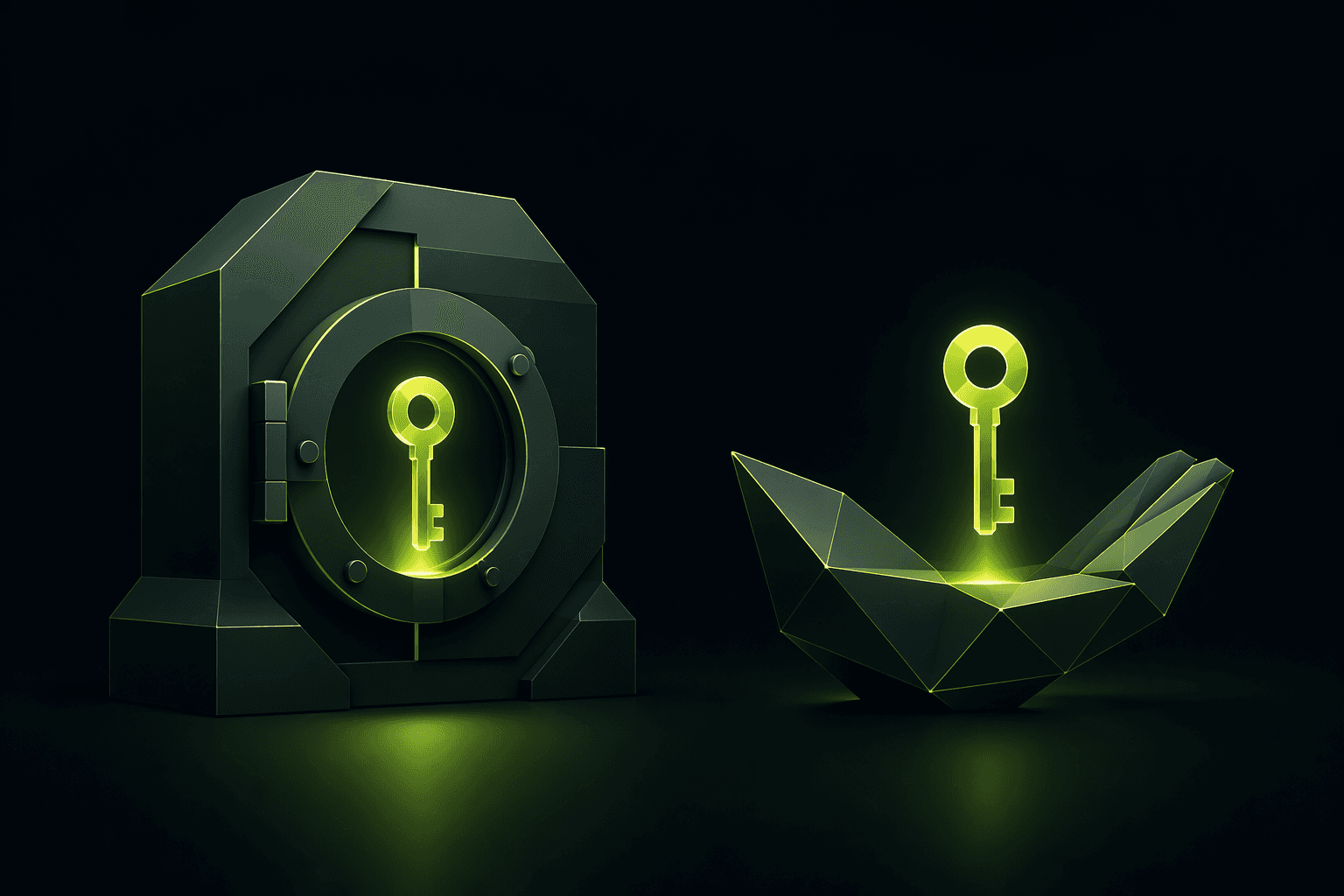
A crypto wallet does not store coins: they remain records on the blockchain. A wallet manages the keys that provide access to those records. In a custodial wallet, the service controls the keys, which is easier for beginners. In a non-custodial wallet, you control the keys, but losing your seed phrase means losing access with no way to recover it.
What a wallet actually stores
A crypto wallet is a tool for managing access to cryptocurrency on the blockchain. It displays your balance, generates addresses, and signs transfers. The coins themselves are not stored in the app, on your phone, or on a physical device.
To use a wallet safely, you need to understand the difference between an address, a private key, and a seed phrase.
An address is the information used to receive cryptocurrency. It can be compared to a bank account number. You send the address to the payer or paste it into the withdrawal field. You can share your address with others: by itself, it does not give anyone the right to manage your assets.
A private key is a secret used by the wallet to sign transfers. If someone else obtains the key, they will be able to control the funds. Do not send it, photograph it, or enter it into someone else’s forms. Legitimate support does not need your private key to check a transaction.
A seed phrase is a set of words from which a wallet restores private keys. It is also called a backup phrase or recovery phrase. It is not an app password. A password protects access on a specific device, while a seed phrase lets you restore the wallet on another device.
A password for a custodial account can sometimes be reset under the service’s rules. A lost seed phrase for a non-custodial wallet cannot be recovered. The blockchain does not identify an owner through a passport, phone number, or email address. It only verifies a digital signature.
If you have not bought cryptocurrency before, first decide who will control the keys. Only then move on to choosing how to buy cryptocurrency.
Custodial vs. non-custodial: comparison table
A custodial wallet transfers control of the keys to a service, while a non-custodial wallet leaves that control with the owner. The difference affects account recovery, possible restrictions, and responsibility for mistakes.
With a custodial wallet, you log in to an account using a password. The keys are managed by an exchange, platform, or other provider. Whether you can recover access depends on the procedures of the specific service.
With a non-custodial wallet, the private keys or seed phrase are held by you. The service cannot recover them for you. At the same time, it does not control your wallet and cannot sign transactions using your key on its own.
Criterion | Custodial wallet: exchange or service | Non-custodial wallet: self-custody wallet |
|---|---|---|
Who holds the key | The service controls the keys. You manage an account in its system. | You control the keys through a seed phrase, private key, or device. |
What happens if you forget the password | Access can sometimes be restored through the service’s procedure. Terms depend on the platform. | The app password can be changed after restoring the wallet with the seed phrase. If the seed phrase is lost, access is gone. |
What happens if the service shuts down | Access will depend on whether you can withdraw funds and on the actions of the service itself. | A saved seed phrase lets you restore the wallet in a compatible tool. |
Can funds be frozen | The service may restrict transactions or account access under its own procedures. | A centralized service does not directly control the wallet. You can lose access due to a stolen key, an incorrect transfer, or a malicious smart contract. |
Verification | Often required to use the service fully. | The wallet itself usually does not require an account. Third-party platforms may have their own requirements. |
Ease of use for beginners | Easier onboarding, password recovery, and fewer technical steps. | You need to store the seed phrase, check the network, and protect the backup yourself. |
Who is responsible for a mistake | Support may help with login issues. However, an incorrect blockchain transfer can still be irreversible. | You are responsible for the seed phrase, device, signing transactions, address, and network. |
Who it is suitable for | Someone making their first purchase who is not ready to store a seed phrase independently. | Someone who understands the responsibility for keys and is ready to organize their protection. |
For a first small amount, a custodial wallet is often more convenient, and that is normal. A non-custodial setup without proper preparation can create more risks. The most common one is losing the seed phrase along with access to the assets.
A non-custodial wallet does not automatically make its owner more secure. It removes dependence on a service holding the keys, but transfers the responsibility to you. If you first need to choose a buying method, compare P2P, an exchange service, and a crypto exchange.
Types of non-custodial wallets

Non-custodial wallets differ in how keys are stored and how they are used. The format affects convenience, transaction frequency, and the main risks.
Mobile or desktop wallet
This is an app on a phone or computer. It is called a hot wallet because the device is usually connected to the internet. This format is suitable for regularly receiving funds, making transfers, and connecting to third-party platforms.
The main risk is a compromised device. Malware, a phishing website, or a fake app can provide access to your assets. Check downloads on the product’s official website. Do not install files from chats or advertisements.
Browser extension
A browser wallet is suitable for interacting with decentralized applications. It allows you to sign transactions directly on websites, but this is also what creates the main risk.
A malicious website may ask you to do more than confirm a login. The request may grant permission to manage tokens or initiate an unwanted transaction. Before confirming, read exactly what action the wallet displays.
Hardware wallet
A hardware wallet is a separate physical device used to store and use keys. It is considered cold storage because the key does not need to remain continuously accessible through a connected device.
This format is suitable for long-term storage of an amount you could not afford to lose. You still need to write down and protect the seed phrase. Risks include counterfeit devices, buying second-hand, third-party instructions, and offers to “verify” your seed phrase on a website.
Paper or offline backup
An offline backup is not a separate wallet, but a backup copy of the seed phrase on a physical medium. It helps restore access if your phone is lost, the device breaks, or the app is deleted.
The main risks are loss, theft, fire, water, and access by another person. The copy must be complete, readable, and protected from accidental discovery.
Seed phrase: rules with no exceptions
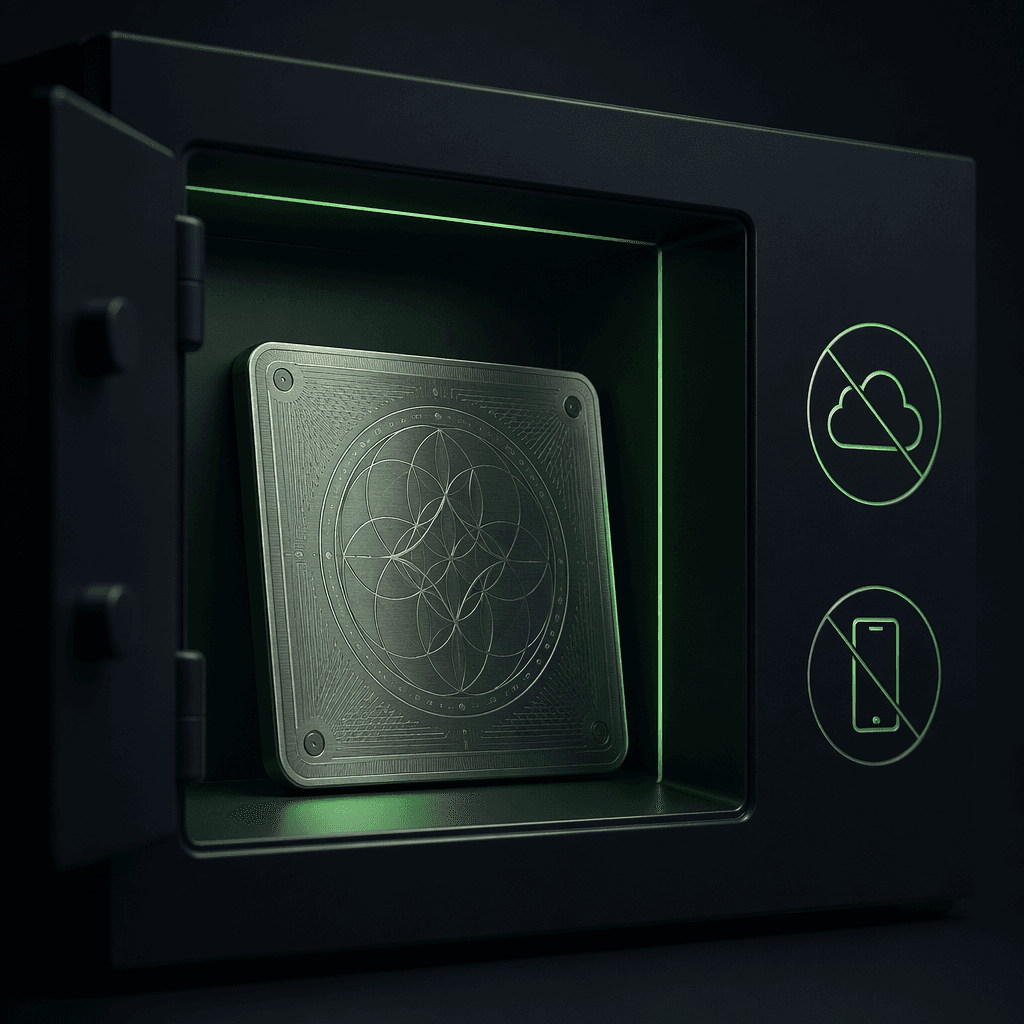
Store your seed phrase offline and never show it to anyone. For a non-custodial wallet, it is effectively the key to your assets. Someone who obtains the phrase does not need your phone, password, email, or SMS code.
- Write down the seed phrase offline.
The simplest method is to write it down by hand on paper. For long-term storage, you can choose a physical medium that is more resistant to damage. Do not keep the phrase in notes, photos, email, messengers, documents, or cloud storage. Such files can sync or end up in someone else’s account.
- Never enter your seed phrase on a website or in a chat.
Legitimate support never asks for a seed phrase. It is not needed for verification, unlocking, confirming ownership, or updating an app. Any form that asks for the words in your phrase should be considered an attempt to steal access.
- Do not believe promises to restore access or reverse a blockchain transfer.
Scammers use fear and urgency, offering “verification” or technical assistance. Do not give them your seed phrase, private keys, codes, or remote access to your device. Signs of fraud are covered in the guide on how to identify a scam exchange service.
- Keep a backup in a second physical location.
One copy may disappear along with your documents, belongings, or home. The second location should not be obvious to others. Do not leave the wallet name or an explanation of what the phrase belongs to nearby.
- Test recovery with a small amount.
Do this before transferring an amount you could not afford to lose. Make sure all words are written correctly and in the right order. Perform the test on a clean device, with no cameras or other people nearby.
- Treat a seed phrase as money.
Whoever has the seed phrase can take control of your assets. Once exposed, the phrase must be considered compromised. If you still have access, move the assets to a new wallet with a new seed phrase.
Do not enter the phrase after receiving a message about a transaction problem. It is not needed to check a transfer and will not help reverse it.
How to choose a wallet for your situation
Choose a wallet based on how you plan to use it and whether you are ready to take responsibility for the keys. A format suitable for a first purchase may not be suitable for regular transactions or long-term storage.
A one-time small purchase. A custodial option is acceptable if you are just getting started and are not ready to store a seed phrase. It reduces the number of steps where you can make a mistake. First, learn about addresses, networks, and transfer confirmation rules. For this kind of start, a guide on how to buy cryptocurrency through Telegram may be useful.
Regular transactions and amounts that would be painful to lose. A non-custodial hot wallet gives you direct control over the keys. At the same time, you need to check the address, network, signing requests, and device security. Before switching, prepare an offline copy of the seed phrase and test your ability to recover the wallet.
Long-term storage of a significant amount. For an amount you could not afford to lose, it is more appropriate to consider a hardware wallet. It should be combined with a properly protected offline backup. This format reduces reliance on a continuously connected device, but increases the requirements for physical storage.
Do not transfer all assets to a new address at once. First, make a test transaction and confirm that it arrives. Only then send the rest.
Wallet and network: what breaks most often
A wallet supports specific blockchain networks, so the asset name alone is not enough to make a transfer correctly. A token can exist on several networks, while the selected wallet or service may support only some of them.
Before receiving an asset, open it in your wallet and check the available networks. Then select the same network on the sending side. A similar-looking address or a lower transaction cost does not confirm compatibility.
An address on one network may not work on another. As a result, assets may become unavailable, and recovery will depend on the specific technical situation. Mistakes happen when a user is in a hurry, copies old details, or relies only on the token name.
Before sending, check:
- The asset name.
- The sending network.
- The receiving network in the wallet.
- The beginning and end of the address after pasting it.
If you have any doubts, do not confirm the transaction. First, find out which network your wallet supports. If the transaction has already been sent, the guide on a wrong network used for a crypto transfer will help you assess the situation without rushing.