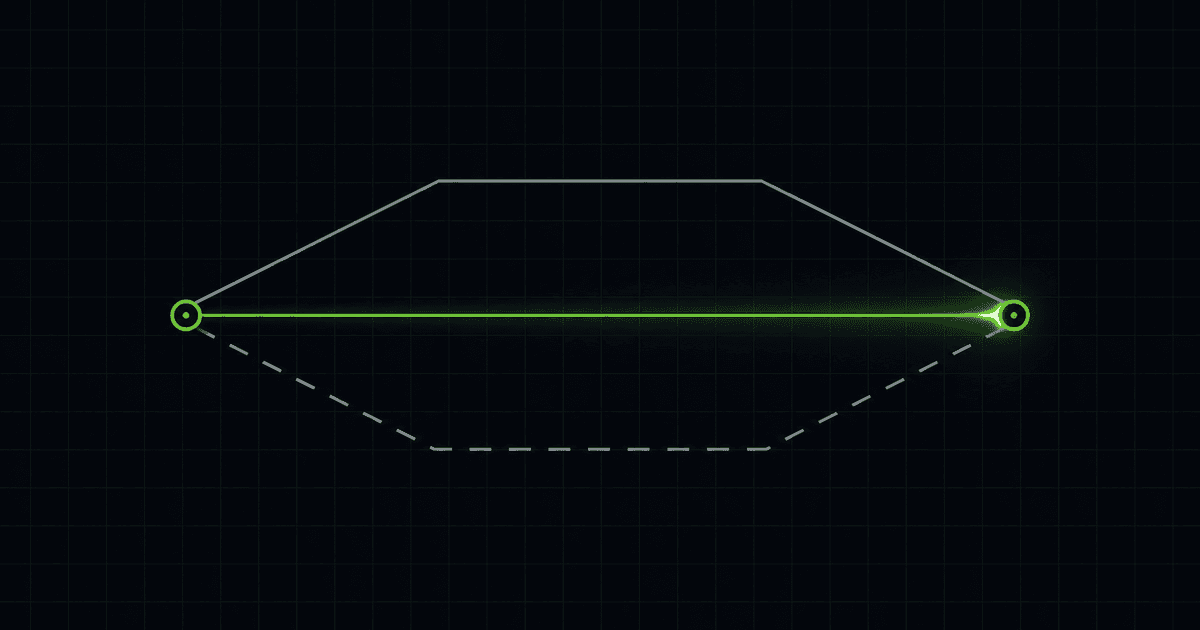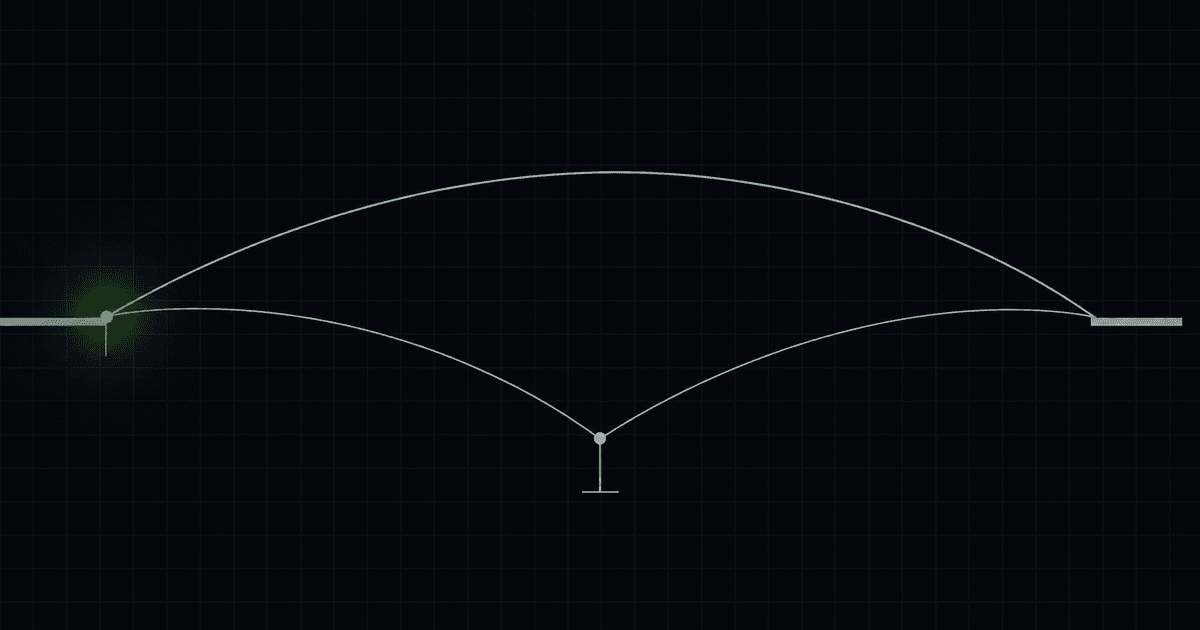

In brief. The network fee does not go to the exchange service or trading platform: it is distributed by the blockchain itself under protocol rules. The difference between Tron and Ethereum lies in how they charge for resources, computation, and block space. Fees change constantly based on network congestion and transaction complexity, but not on the amount of USDT you send.
This material is reviewed annually. Network fees and congestion levels change, so always check the amount in your wallet or service before sending.
Who Actually Receives the Network Fee
The network fee is distributed by the blockchain according to its protocol rules, not by the service through which you buy or withdraw cryptocurrency.
A network fee is the charge for processing and recording a transaction on the blockchain. It covers network operations and protects the system from mass submissions of unnecessary transactions.
A single transfer may include several cost components at the same time. If you do not separate them, it is easy to confuse the network fee with a service fee or an exchange-rate spread.
The first component is the blockchain fee. On Ethereum, it is tied to gas, which pays for computations performed by the network. Tron uses bandwidth and energy resources for this purpose. If available resources are insufficient, the network deducts its native coin under its own rules.
The second component is the service fee. An exchange service, trading platform, or wallet may charge it for processing an order, converting funds, or withdrawing an asset. This is not a network fee, even if the service displays both components in a single line.
The third component is the spread, meaning the difference between an asset’s market price and the rate used for a specific transaction. A spread is not a blockchain charge or a reward for validators. Read more about how exchange rates are formed.
The total cost may also include fiat conversion and expenses related to the payout method. Therefore, before confirming a transaction, check the final amount the recipient will receive, not just the network fee line.
Why Ethereum Can Be Expensive: The Gas Model
Ethereum becomes more expensive when users compete for limited space in blocks. However, when network activity is low, a transfer on this network may be inexpensive.
Ethereum does not have a fixed rate for token transfers. Users pay for gas — a unit of computational work performed by the network during a transaction. The calculation principle is explained in the Ethereum documentation.
The network fee includes base and priority components. The base fee is set by the protocol according to block congestion. This portion is burned. The priority fee rewards the validator and can increase a transaction’s priority.
The mechanism resembles an auction for block space. If few users want to process transactions, the base fee decreases. When demand for block space rises, transactions become more expensive. An exchange service does not control this process and cannot lock in the gas price.
A USDT ERC-20 transfer is more complex than a standard ETH transfer. The token operates through a smart contract, so the network executes its code, checks the balance, and changes the contract state. This requires more computational resources.
The claim that ERC-20 is always expensive is outdated. As of July 13, 2026, Etherscan showed a gas price of 0.189 gwei, with an estimated transaction cost of around $0.12. This is only a snapshot of network conditions on a specific date, not a fixed rate. Current figures are available in the Etherscan Gas Tracker.
One reason for lower congestion is that some activity has moved to Layer 2 solutions. However, the principle remains unchanged. If demand for computation rises because of smart contract activity, liquidations, or arbitrage, the cost of block space will rise as well.
Why Tron's Fee Holds Steady: The Energy and Bandwidth Model
Tron is often less expensive because of its resource model, which does not use the same gas auction as Ethereum.
The network has two main resources: bandwidth and energy. Bandwidth is related to transaction size, while energy is required to execute smart contracts. A USDT TRC-20 transfer interacts with a smart contract, so energy is especially important for it.
Resources can be obtained by staking TRX. If sufficient energy or bandwidth is available, the wallet uses it for the transaction. If resources are insufficient, the network deducts TRX according to protocol rules. The mechanism is described in the TRON documentation.
This model makes costs more predictable, but it does not turn them into a fixed rate. Actual resource requirements depend on the transaction, the address state, and the load on the smart contract. Tron can also change resource-model parameters through network governance mechanisms.
Before signing a transaction, check the estimate in your wallet. Do not rely on old tables or screenshots: they do not account for the state of a specific address or current network parameters.
A lower cost does not mean Tron is better than Ethereum for every use case. The networks differ in architecture, governance, validator models, and ecosystems. Choose the network supported by the recipient.
Comparison Table: What Makes Up the Cost of a Transfer

The total cost of a transfer may include a network fee, service fee, spread, and conversion costs.
Cost component | Who receives it | What it depends on | Can you influence it? |
|---|---|---|---|
Blockchain fee | Validators and protocol mechanisms; part of the fee may be burned | Network congestion, transaction complexity, resource requirements, selected network | Partially: choose another supported network, send at a different time, or prepare the native coin |
Service fee | Exchange service, trading platform, wallet, or another service provider | Service terms and transaction type | Yes: check the order terms and final amount received |
Spread | Included in the transaction rate and not paid to the blockchain as a separate charge | Market price, liquidity, exchange direction, and order execution terms | Partially: check the rate and amount received before confirmation |
Fiat conversion cost | Payment and financial participants according to the settlement method | Fiat direction, payout or top-up method, payment channel terms | Partially: review all transaction stages in advance |
Hidden cost of an error: wrong network | There is no separate recipient; it is the result of an incorrect action | A mismatch between the sending and receiving networks | Yes: verify the network, address, and additional details |
Any reduction in the amount should not automatically be called an exchange service fee. A service may display the network cost of a withdrawal, but it does not set Ethereum gas prices or control blockchain congestion.
A low network fee also does not guarantee the cheapest transaction. You need to assess the final result: how much of the asset you send, how much the other party receives, and whether they support the selected network.
Also check deposit addresses and additional details separately. Some assets require a memo or tag for transfers. This is not a fee, but a missing detail can delay or complicate the crediting of funds.
What Determines the Fee and Why It Fluctuates
The fee depends on the work the network must perform, not on the value of the USDT being sent.
Network congestion. On Ethereum, users compete for block space. When there are more transactions, the base fee rises. On Tron, costs are affected by available resources and the load on a specific smart contract.
Transaction complexity. Sending a native coin and calling a smart contract require different amounts of computation. USDT ERC-20 and USDT TRC-20 operate through contracts, so the network performs more actions.
Priority. On Ethereum, a user can offer the validator a priority reward. This can help during congestion, but it increases the total fee. If the transaction is not urgent, there is no point in setting an excessively high priority.
Availability of the native coin. USDT ERC-20 transfers require ETH. Tron requires resources or TRX, which the network uses if resources are insufficient. USDT itself usually does not pay the network fee.
The network fee does not depend on the transfer amount. The same contract transaction may cost the same for a small or large amount of USDT. This is why the network fee represents a larger share of a small transfer.
How to Avoid Overpaying: 6 Practical Rules
You can reduce costs by checking the network, wallet resources, and current fee estimate in advance.
- Choose the network for the specific task.
First, find out which networks the recipient supports. USDT on Tron, Ethereum, or BNB Smart Chain uses different technical routes. If you are unsure, check which network to choose for a transfer. A low fee will not help if the recipient does not support that network.
- Do not split the amount unnecessarily.
Each transaction is processed separately by the blockchain. If you send funds in several parts, a network fee applies to every transaction. Combining transfers can reduce total costs if this aligns with your security practices.
- Prepare the native coin for the fee.
Ethereum requires ETH, while Tron requires TRX or available resources. A common issue is having USDT in a wallet but being unable to send it because there is not enough native asset.
- Check the fee before confirming.
Your wallet displays a current estimate for the specific transaction. Do not rely on old screenshots, articles, or forum posts. Network conditions can change between planning and the actual transfer.
- Avoid peak congestion if the transaction is not urgent.
During active events, demand for block space rises. If you can wait, check the fee later. This does not guarantee a lower charge, as congestion changes unpredictably.
- Do not save money by choosing the wrong network.
Assets may not be credited automatically if the sending and receiving networks do not match. Recovery may sometimes require manual review or be technically impossible. The consequences are explained in a guide to wrong-network transfers and their cost.
How It Works at an Exchange Service
An exchange service may account for the network fee in its withdrawal terms, but it does not set the blockchain’s own rules.
If a transaction requires sending an asset on-chain, network costs cannot be avoided. A service may display them separately or include them in the order parameters. The exact display depends on the exchange direction and execution method.
This is why transactions involving the same stablecoin on different networks may have different terms. Such a difference does not necessarily mean there is a hidden markup. Ethereum, Tron, and other blockchains calculate resources differently, and their current congestion levels vary.
TRC-20 is often convenient because of its more predictable resource model. However, it should be chosen only if the recipient supports Tron. Before placing an order, check the available direction for USDT TRC20 exchange or USDC ERC20 exchange.
Do not rely solely on the token name. USDT TRC-20 and USDT ERC-20 require different networks and assets to pay fees. Before confirming, verify the network, address, amount sent, amount received, and any warnings in the form.