
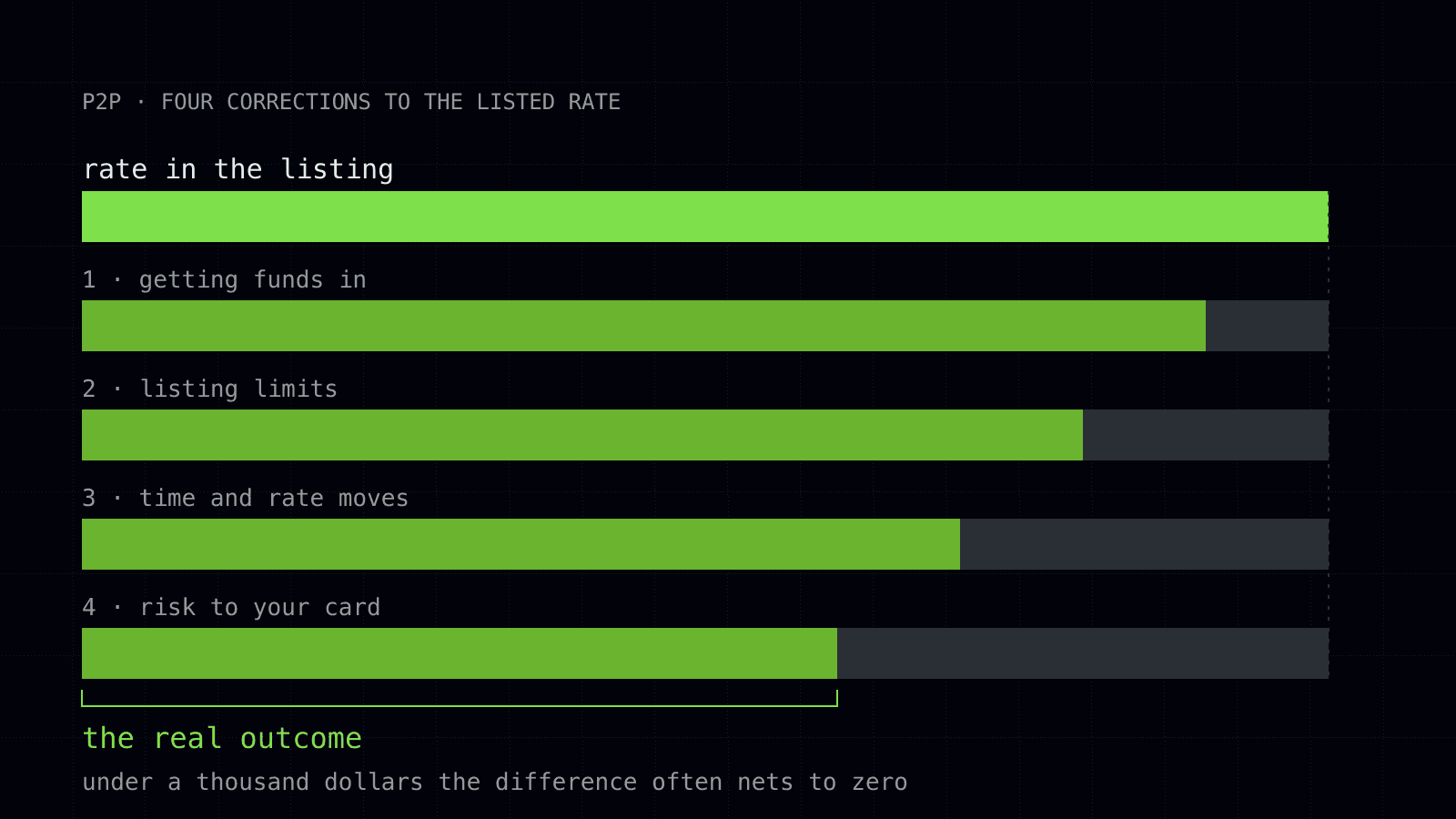
The rate in a P2P ad is the price of one USDT, with no account of how it got there or how it will leave. The real rate of a deal appears after four adjustments, and on small amounts they eat up the entire gap with an exchange service.
Adjustment one: moving funds onto the network
To sell USDT on the platform, you first have to send it there. That transfer costs a network fee: on TRC20 in autumn 2026 that is about two dollars, on ERC20 it is usually less, though at a busy hour several times more. The fee does not depend on the amount, so on three hundred dollars in an expensive network it equals a solid percentage point or more.
If the USDT is already sitting on the platform, this adjustment is zero. If it is not, put it on the first line of your calculation.
Adjustment two: the limits of the ad
The best price almost always sits in an ad with a narrow window, say from 5,000 to 20,000 hryvnia. Your amount either fits inside it or it does not.
If it does not fit, you either split the deal into several or take an ad with a worse price. Splitting adds time and, more importantly, several separate credits to your card on the same day.
Adjustment three: time
The deal runs at the pace of a live human being. A normal one takes fifteen to twenty minutes, but the seller may go quiet while you wait with your funds locked.
Time is not money directly, but the USDT to hryvnia rate can shift within an hour. If the deal is cancelled, you start again at a different price.
Adjustment four, the big one: your card
The platform holds the crypto in escrow and protects the seller. It gives your card no protection at all.
If your counterparty paid with money of questionable origin, the bank will put its questions to you, because the money landed in your account. This is neither rare nor a scare story: it is exactly why experienced traders refuse payments from third parties and never write the words "crypto", "USDT" or "exchange" in the payment reference.
One more rule from the same place: a dozen small credits from different people in a single day looks worse to a bank than one transfer of the same total.
How to run the numbers in a minute
Take the price in the ad. Subtract the network fee for funding, divided by your amount. Check whether your amount fits the limits. Estimate how many separate credits will hit your card.
Compare the result with the exchange service's final figure, the one shown before you create an order. The gap is often smaller than the ad suggests, and on amounts up to a thousand dollars it frequently comes out at zero.
When P2P still comes out ahead
When the USDT is already on the platform, your amount fits the window of the best ad, you have time to spare, and you are ready to explain the source of funds to your bank. Then the gain on the rate is real and worth taking.