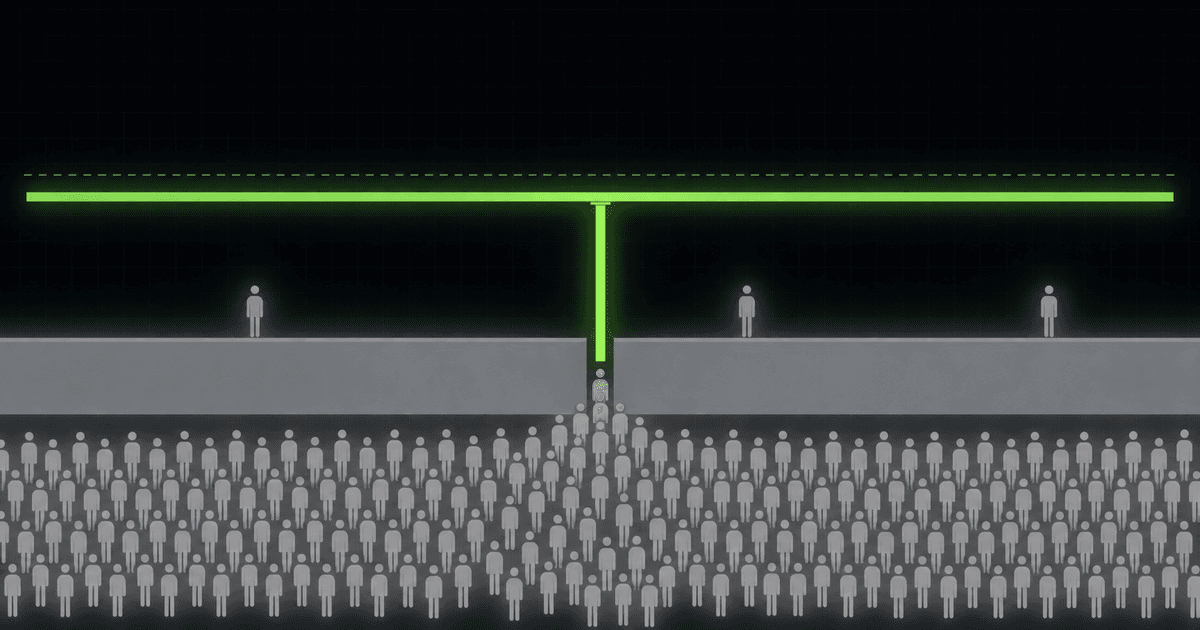
Freezing USDT is an entry in the token's own contract, and it is done by the issuer — not by the network, not by a crypto exchange and not by an exchange service. A blocked address stops sending USDT but keeps receiving it. The network's coin and other tokens at the same address move freely: what is frozen is one token on one network, not the wallet.
The wallet will not show the reason. The check in the contract is written with no error text, so the wallet shows a refusal with no explanation, and the node answers execution reverted with an empty data field. The reason can be found out free of charge: the USDT contract page in the explorer has a read function, isBlackListed — put your own address into it.
The check needs no wallet connection, no signature and no fee. An answer of true or 1 means the address is on the blacklist; false or 0 means the reason for the refusal is a different one.
A freeze by the issuer and a risk flag are different things
USDT is a stablecoin with a single issuer, and the freeze lever belongs to that issuer alone. A risk flag is put on by a third-party analytics service, which has nothing to do with the contract. The difference shows on four counts.
feature | a freeze by the issuer | a risk flag at a checking service |
|---|---|---|
Where it lives | in the token's contract, on the network itself | in a third party's database |
Who carries it out | the contract itself, automatically | the receiving party, at its own discretion |
What happens to the transfer | it does not go through at all | it goes through; the questions come afterwards |
Is it visible to everyone | yes, through a public function call | no, only to the service's subscribers |
What to do if the matter is not a freeze but a risk flag is covered separately — checking USDT for “dirty” coins.
What exactly breaks
Measurement of 19.09.2026: a real address from the Ethereum blacklist was taken, and transfers on it were worked out by simulation, without sending anything to the network. Three results explain the whole picture on the screen.
- There is no error message. A transfer out of the address is rejected, and the data field in the answer is empty. The contract has nothing to say to the wallet, so the wallet shows a nameless refusal. The absence of a reason on the screen is itself the sign.
- The address does not stop receiving. A transfer to that same address, in that same test, went through successfully. Money arrives and stays, and that is the trap: a person sees the incoming payment and decides everything is fine.
- One token is blocked, not the wallet. The network's coin at that same address is alive and the network does not touch it; the entry in the USDT contract has no bearing on other tokens. The correct wording is “the USDT at the address has been frozen”, not “the wallet has been frozen”.
A word about networks: the lists are separate. An address blocked in the ERC20 contract on Ethereum is not automatically blocked on TRON — those are two different contracts with two different tables. The same person can be on one list and not on the other.
How to check your address in a minute
The wallet does not name the reason for the refusal; the explorer does — free of charge and without a signature. The order is this:
- Open the page of the USDT contract, not the page of your own wallet: those are different addresses, and only the contract has read functions. Paste the contract address into the explorer's search by hand: on TRON
TR7NHqjeKQxGTCi8q8ZY4pL8otSzgjLj6t, on Ethereum0xdAC17F958D2ee523a2206206994597C13D831ec7. - Do not look for the contract by the word “USDT”: in the Ethereum explorer the first 50 results of such a search hold 30 contracts with that ticker, and only one of them is the real one (measured 19.09.2026).
- Go to the contract's read tab.
- Find the function
isBlackListedand put your address into the field. - Read the answer:
trueor1means the address is on the list,falseor0means it is not. The contract also hasgetBlackListStatus— the same check under a different name.
There is no need to connect a wallet or sign anything: a read function changes nothing on the network. How to read the page of the transaction itself in this explorer — a walk-through of the Ethereum explorer.
An answer of false closes off the freeze theory and leaves the ordinary ones: not enough of the network's coin for the fee, the wrong network chosen, a mistake in the recipient's address.
On what grounds this is done and who presses the button
The right to freeze is written into the issuer's terms of service, and the wording there is broad (page captured 19.09.2026). A freeze is allowed when applicable law requires it — or when the issuer, at its own discretion, deems it reasonable. Adding an address to the blacklist is named there as a separate measure.
No court decision is required. The agreement expressly allows a freeze at the issuer's discretion, and the mention of law enforcement in its public statements describes practice, not a term of the contract. The same document sets out mandatory reporting to regulators, and the issuer passes personal data to law enforcement when it has been obliged to, and voluntarily if it deems that reasonable and necessary.
Who presses the button: the owner of the contract on Ethereum is not a person with a key but another contract (measured 19.09.2026). So a block goes through a program, not through a single signature. What kind of program that is we did not establish: we did not look inside.
One more detail: the contract has a built-in transfer fee, and as of 19.09.2026 it is zero — we did not dig up the history of its values. The blacklist is not the issuer's only lever.
How common this is
The figures below come from a complete pass through the contract's log on 19.09.2026, not from an estimate. On Ethereum, 3,101 addresses have been added to the blacklist over its whole history, 346 have had the block lifted, and 2,755 are on the list now. On TRON, 8,475 have been added and about 7,510 are on the list. Between them, more than 11.5 thousand addresses have passed through the blacklists of the two networks.
The tempo: 48 additions over the last 35 days on Ethereum and about four hundred a month on TRON; on the collection date the latest addition on Ethereum was two days old, and on TRON it dated from the day before. They go in batches — two or three addresses a minute on Ethereum and four on TRON. That looks like an operation within a particular case, not a one-by-one reaction to an individual wallet.
How much is sitting frozen: as of 19.09.2026 the blocked Ethereum addresses hold 856,099,128.02 USDT, and only 1,402 addresses out of 2,755 have a non-zero balance. Half the list is empty — either the funds were moved out before the block, or they have already been destroyed. That is the balance of one network on one day; how much is frozen on TRON we did not count.
Destruction is a separate function of the contract: it zeroes the balance of a blocked address and reduces the total supply by the same amount. The funds do not pass to the issuer, they cease to exist. Across the two networks about 1.45 billion USDT at 2,339 addresses have been destroyed this way (19.09.2026).
The issuer itself names not addresses but a sum: “over $5 billion frozen” (11.09.2026). That figure is cumulative — over the whole history and across all networks; it is not comparable with a measurement of balances on one network on one day.
Can it be unfrozen
There is no procedure for the owner of an address: the issuer publishes no application process, names no deadlines and gives no guarantees. We found no “apply to have the block lifted” page on its site. The only channel it names is its own support, and its policy pages describe the return of funds sent by mistake, not the lifting of a block.
Unblockings do happen: on Ethereum 346 of the 3,101 addresses added have been taken back off the list, and across the two networks together blocks have been lifted roughly 1,300 times (19.09.2026). But that is a share over the whole history, and it includes liftings that came through law enforcement: the issuer's only wording about unblocking describes it as joint work with them, not as a request from an owner. “One in nine” is not your chance.
What makes sense to do while there is no clarity:
- Write down as text your address, the transfer hashes, the amounts and the dates. It will be needed in any conversation, however that conversation ends, and later there will be nothing left to reconstruct from memory.
- Check your address on the second network separately: the lists are separate, and a block on one says nothing about the other.
- Do not make test transfers of USDT: they will not go through, and you will spend the network fee. The network's coin and other tokens at this address are not blocked and move as usual — if they need rescuing, move them out.
Where there is no freezing at all: “USDT” on BNB Chain
The bytecode of the contract that BNB Smart Chain calls USDT contains no blacklist function at all — verified by a selector search on 19.09.2026. The second contract with the same name on this network has none either. The reason is simple: this token was not issued by Tether — the name and ticker of a contract are written by its author, not by the issuer. The explorer's label calls it a wrapped token, not Tether USD.
The conclusion “so it is safer there” does not follow from this. The absence of a block in the contract means only that the lever is a different one: it belongs to the bridge and to the receiving party. What exactly a bridge operator can do we did not establish.
Short answers
Will the whole wallet be frozen?
No. What is frozen is one token on one network: USDT stops going out, while the network's coin at the same address is alive — that was measured on 19.09.2026. Other tokens live in their own contracts, and the entry in the USDT contract does not concern them. For the same reason a block on Ethereum does not by itself block the same wallet on TRON: two contracts, two separate lists.
Will money still arrive at a blocked address?
It will. A transfer to a blocked address goes through — verified by simulation on 19.09.2026. That is exactly the trap: incoming payments look like a sign that everything is working, but they cannot be sent on.
Is a court decision needed?
No. The issuer's terms of service allow a freeze both when applicable law requires it and when the issuer itself deems it reasonable. A court act is not named there as a condition.
What happens to frozen money?
By default it stays at the address and is visible on the network, it simply does not move. But a separate function of the contract zeroes the balance and reduces the total supply: then the funds cease to exist without passing to anyone. About 1.45 billion USDT have been destroyed this way across the two networks (19.09.2026).
We are an exchange service and we work with USDT on the TRON network. We check where funds come from before the exchange, not after: the question is better asked at the door than once the money has moved on. The outcome of a check does not depend on us alone, so we promise nothing — the direction for exchanging USDT on the TRON network.